

The method
How Systemic Manual Therapy Works
Four ideas underpin everything we do: that the body is a connected network, that it responds to a gentle stimulus rather than force, that pain and recovery pass through the autonomic nervous system, and that the work is defined and repeatable enough to be measured. Here they are in simple terms.
01 · Fascia and tensegrity
Your body is a connected network
Beneath your skin runs the fascia, a continuous web of connective tissue that surrounds and interconnects every muscle, organ, and nerve. Your bones don’t sit in isolation; they float within this network of tension. Push or pull any point and the whole structure responds.
Engineers call this tensegrity. For you, it means something simple: the place that hurts is often not the place the problem comes from. That is why we can work away from your pain, following the system, without chasing the symptom.
The problem is never where you think it is.
02 · Subtle touch
A touch your cells can hear
Fascia is one of the most richly innervated tissues in the body: it is listening all the time. A light, sustained contact, often no more than the weight of a coin, is a signal your nervous system can receive and respond to. Press harder and the body reads it as a threat, and stiffens.
This translation of gentle physical pressure into a biological response has a name: mechanotransduction, and it is why the work is so quiet. Here, gentle is not a compromise: it is the mechanism.
The method isn’t gentle because it’s weak. It’s gentle because it’s precise.
03 · Autonomic nervous system
The switch between alert and recovery
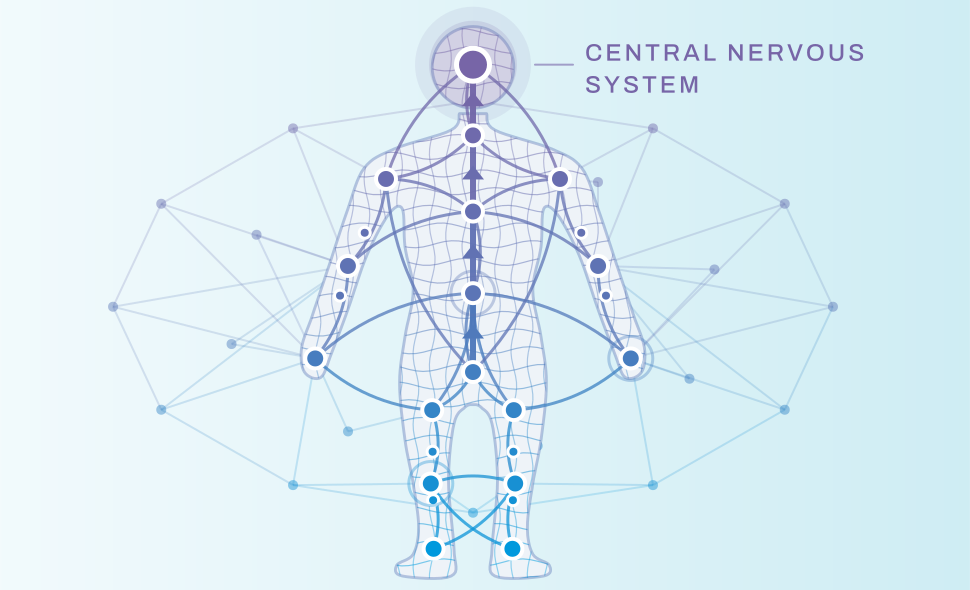
The autonomic nervous system governs everything your body does without asking permission: heartbeat, breathing, digestion, the tone of blood vessels and tissues.
That is why the method is designed around this system: subtle touch activates the mechanoreceptors of the skin and fascia that modulate the autonomic nervous system, creating the physiological condition in which tension can be released gradually. The weight of the touch, the sustained positioning, the unhurried pace: every choice exists to communicate with this system, and that is what makes the approach especially well suited to conditions involving central sensitization.
We don’t fight against fight-or-flight mode; we show the body the way back.
04 · Standardization
Defined, not improvised
SMT is not an improvised technique, different every time. It is a set of named, repeatable protocols, performed the same way, in the same order, every time. That consistency is what makes the work reliable from one session to the next.
It is also what makes it possible to measure honestly and to study. When every session follows a defined protocol, it is possible to truly track what helps, and that is where science comes in.
Standardized vs. non-standardized treatment for central sensitization using SMT
A pilot comparison of defined, standardized protocols against a freer, pragmatic approach, testing whether consistency really matters.
Read the articleSee all the evidenceExplore in depth
See it in motion
The animation path
Short animations show, phase by phase, how injury happens, why pain sometimes does not go away, and how the subtle touch brings the system back into balance. In each one, choose a phase to see it on repeat and read the explanation.
See the animationsThe body isn’t broken.It’s waiting for the right conditions.
If persistent pain has worn you down, there may be another way to meet it.