
Learning path
Animations
Short animations that show, phase by phase, how the method understands the body. They follow a learning path: from fascia to the nervous system and to treatment. In each animation, choose a phase to see it on repeat and read the explanation, in plain or technical language.
Part 1
How injury happens
From tissue to brain: how fascia loses its glide and why tension shows up far from where it started.
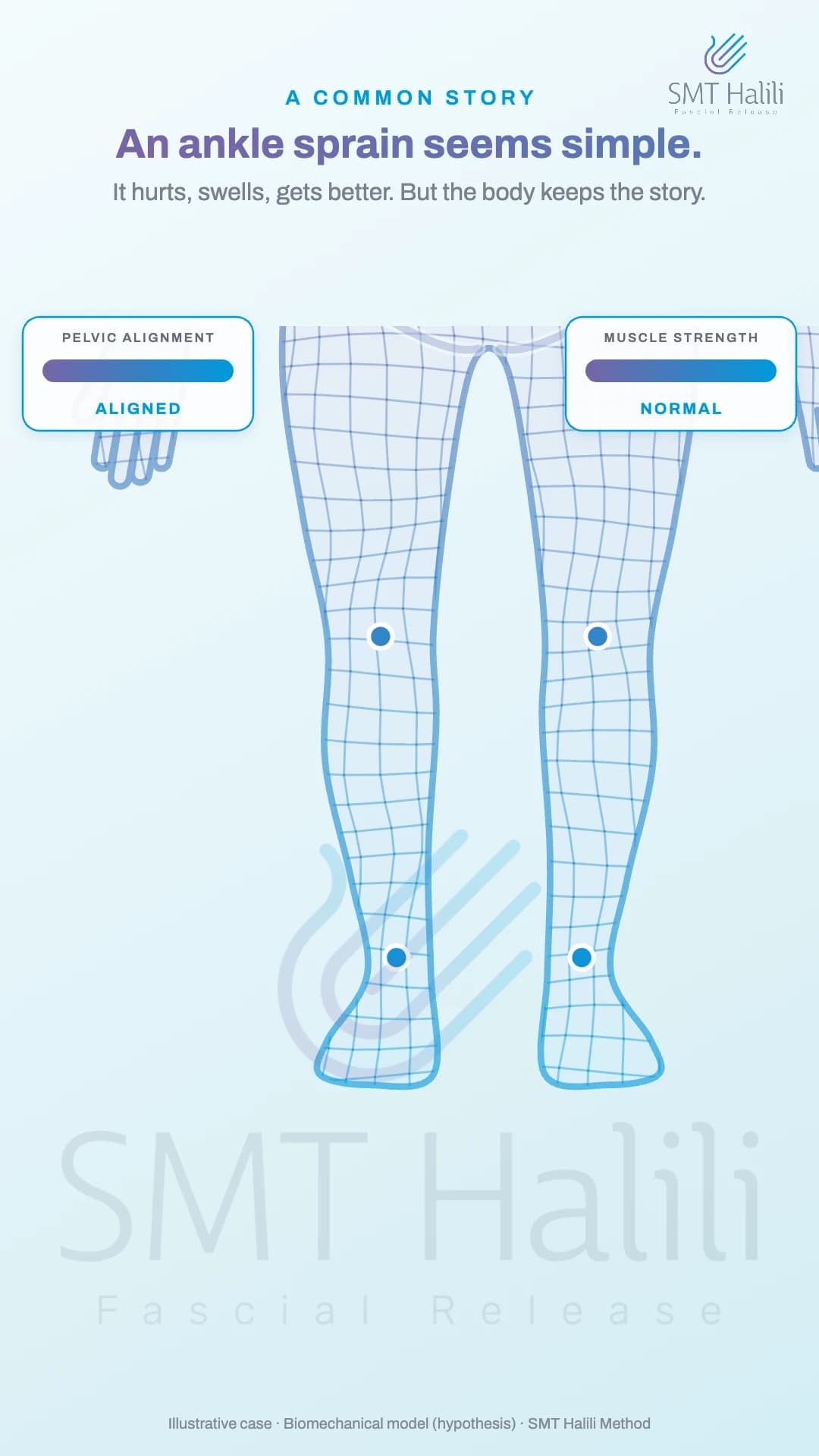 01Theoretical hypothesis
From Ankle Sprain to the Spine
An illustrative case, phase by phase: a hypothesis of how an ankle sprain can climb the fascial chain of tension up to the pelvis and the spine.
7 phases · 55 s
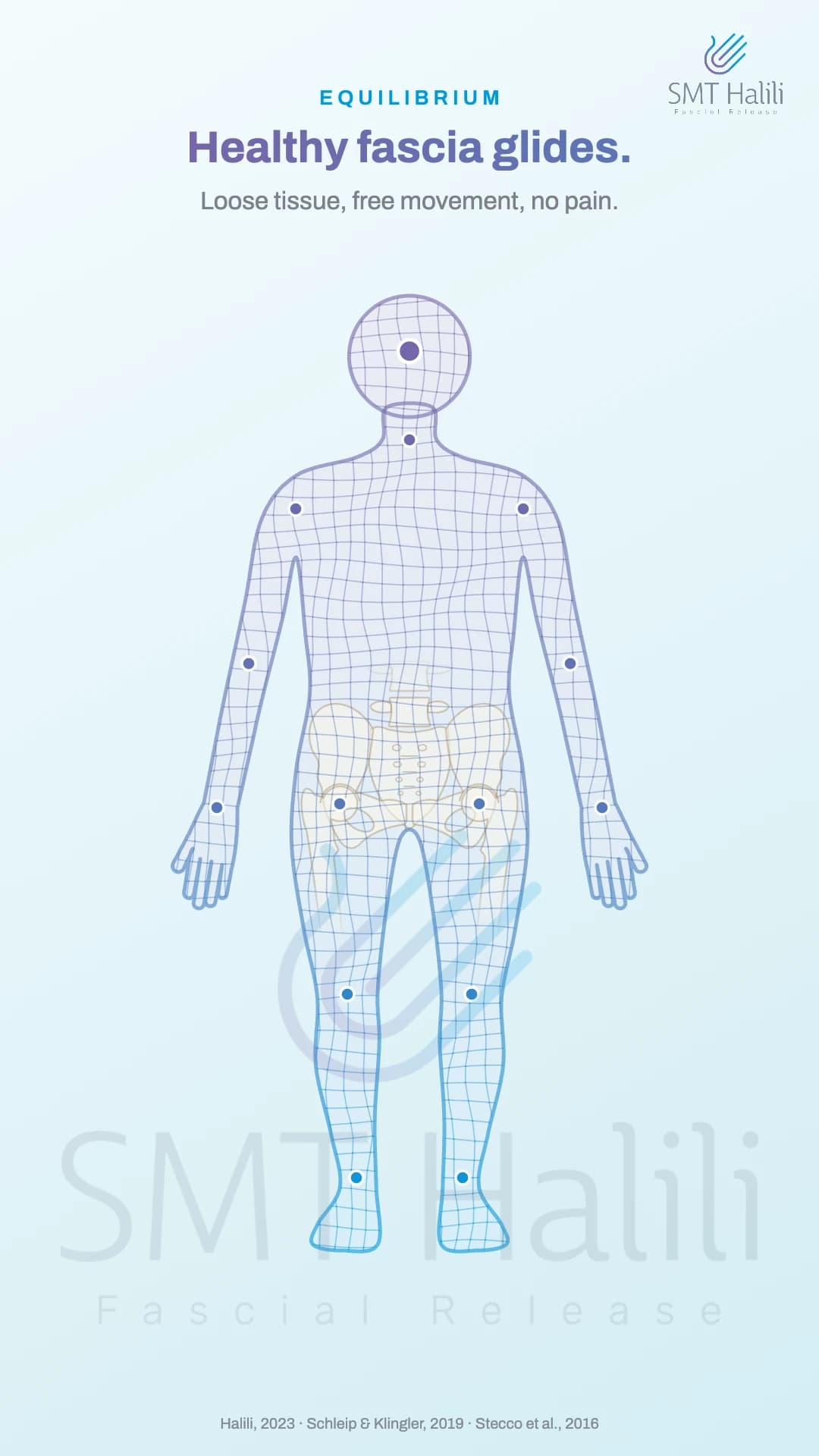 02
Trauma, Central Nervous System, and Tension
A phase-by-phase animation of the path between a trauma in the tissue and fascial tension: the warning travels up to the central nervous system, and the order to protect comes from there.
6 phases · 27 s
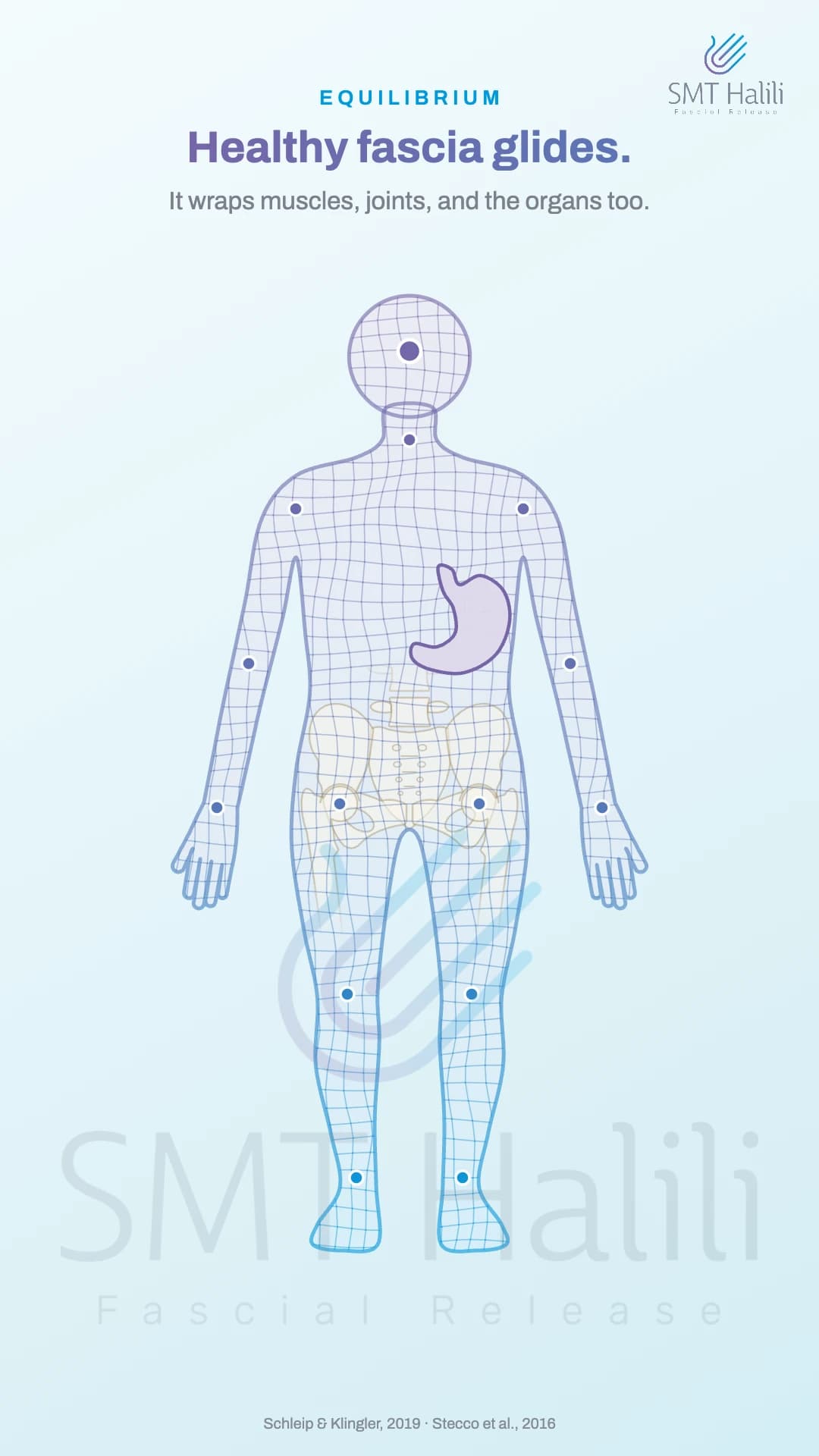 03
Chain of Tension: From the Stomach to the Joint
A phase-by-phase animation of how irritation of an organ, the stomach, can become tension in the shoulder and hip: the source is not always where it hurts.
6 phases · 29 s
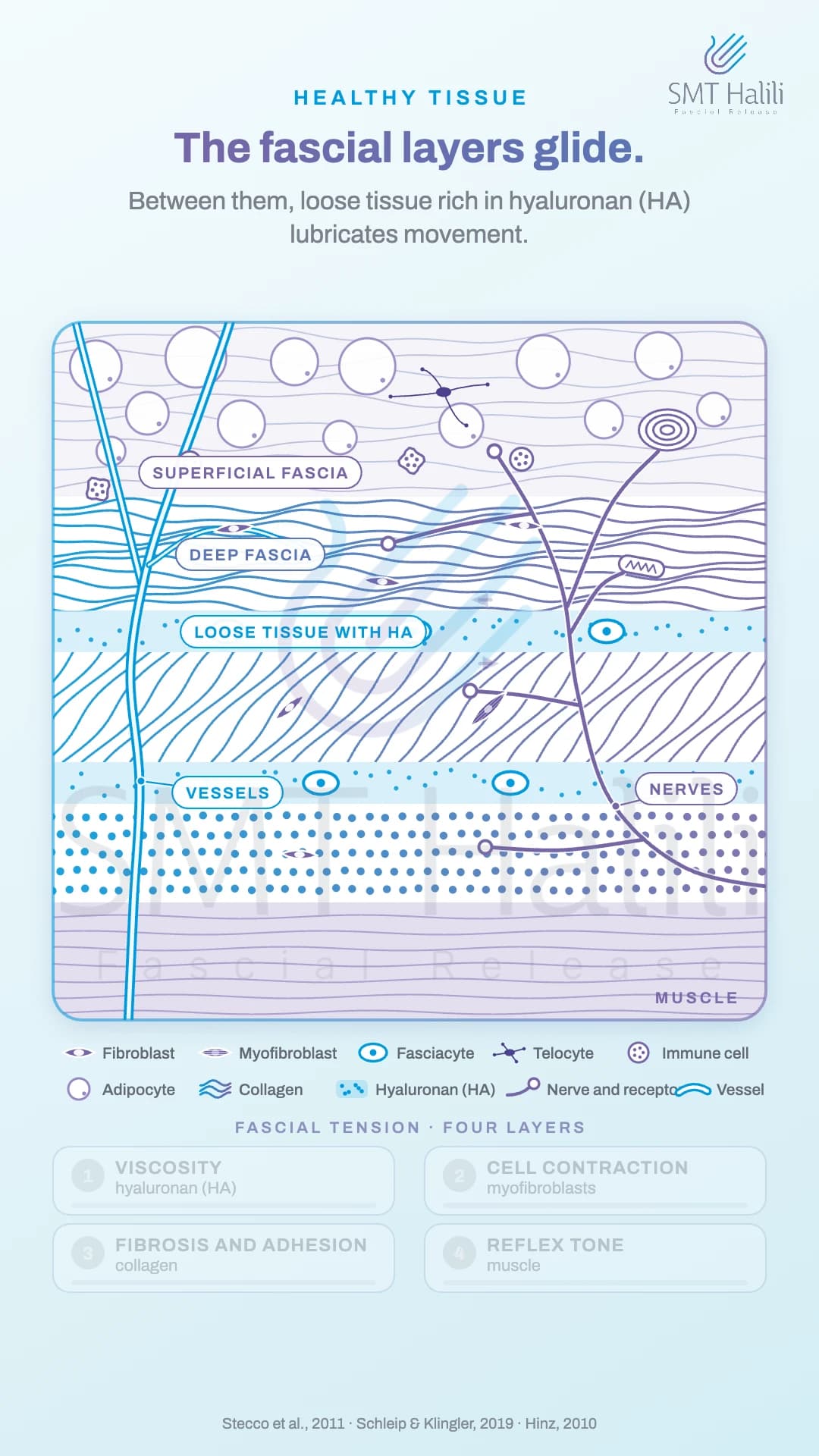 04In depth
From Trauma to Tensioned Fascia
A phase-by-phase animation of what happens in the tissue after a trauma: inflammation, loss of glide, cells that contract, fibrosis, and a self-feeding cycle.
8 phases · 54 s
Part 2
When pain does not go away
Pain that persists after healing, and the model that tries to explain how it is maintained.
 05
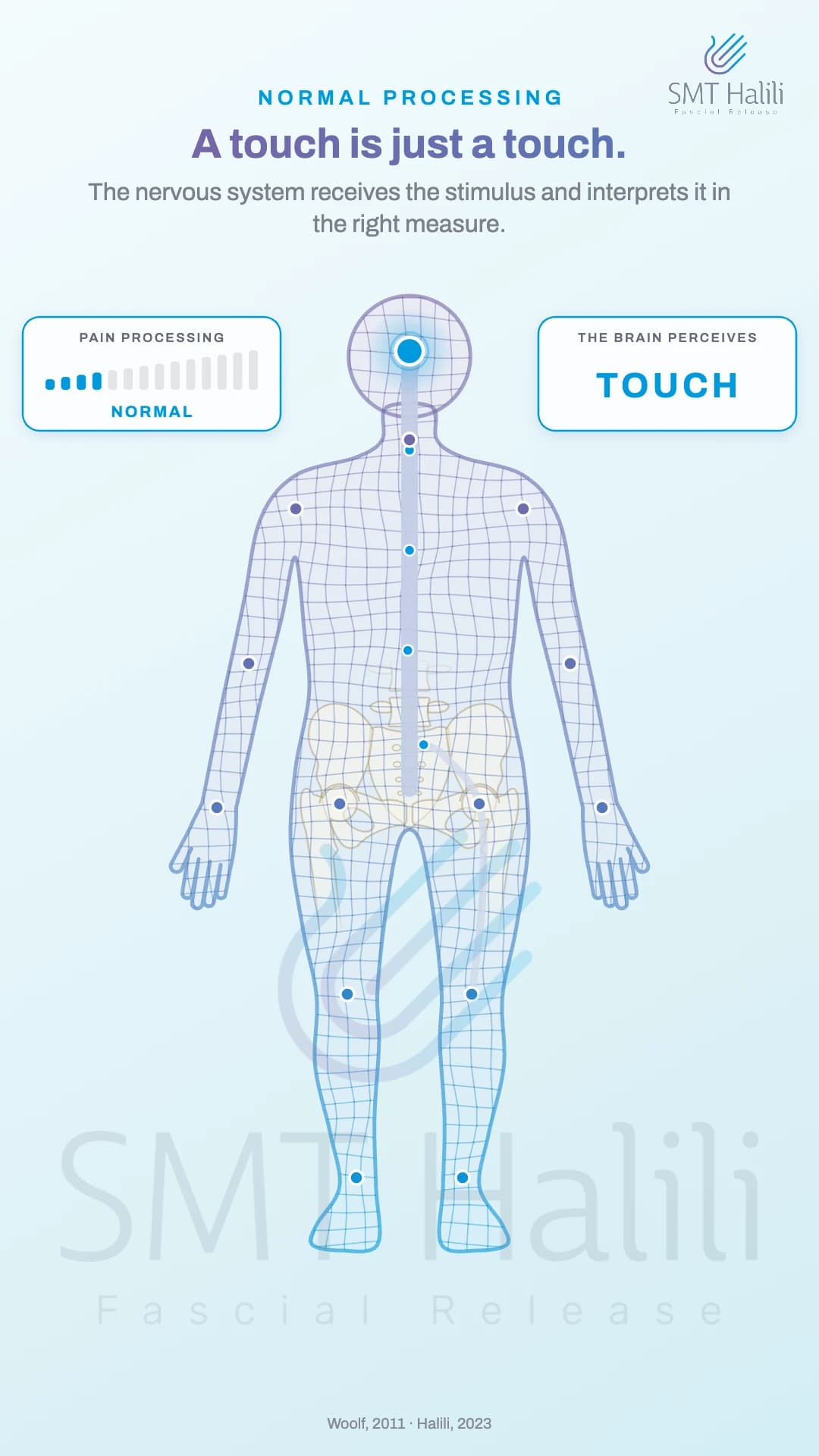
Central Sensitization
A phase-by-phase animation of how pain can continue after the tissue heals: the nervous system starts amplifying the signal, and a light touch starts to hurt.
7 phases · 50 s
 06Theoretical hypothesisIn depth
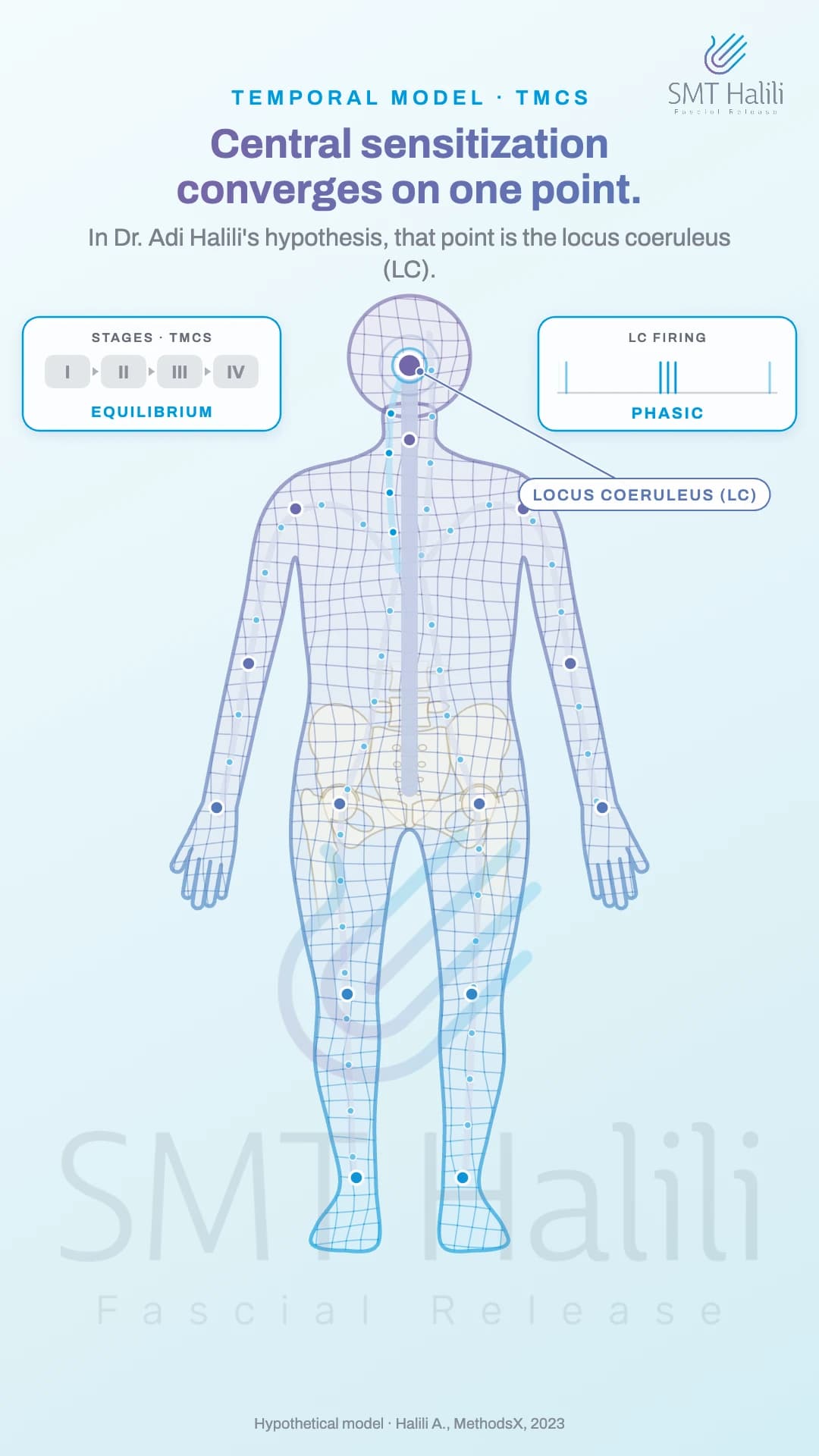
Temporal Model of Central Sensitization
An interactive, phase-by-phase animation of the Temporal Model of Central Sensitization (TMCS): a hypothesis by Dr. Adi Halili, still under investigation.
13 phases · 1 min 28 s
Part 3
Recovery and the balance of the system
How the subtle touch acts on tissue and brings the nervous system back to recovery mode.
 07
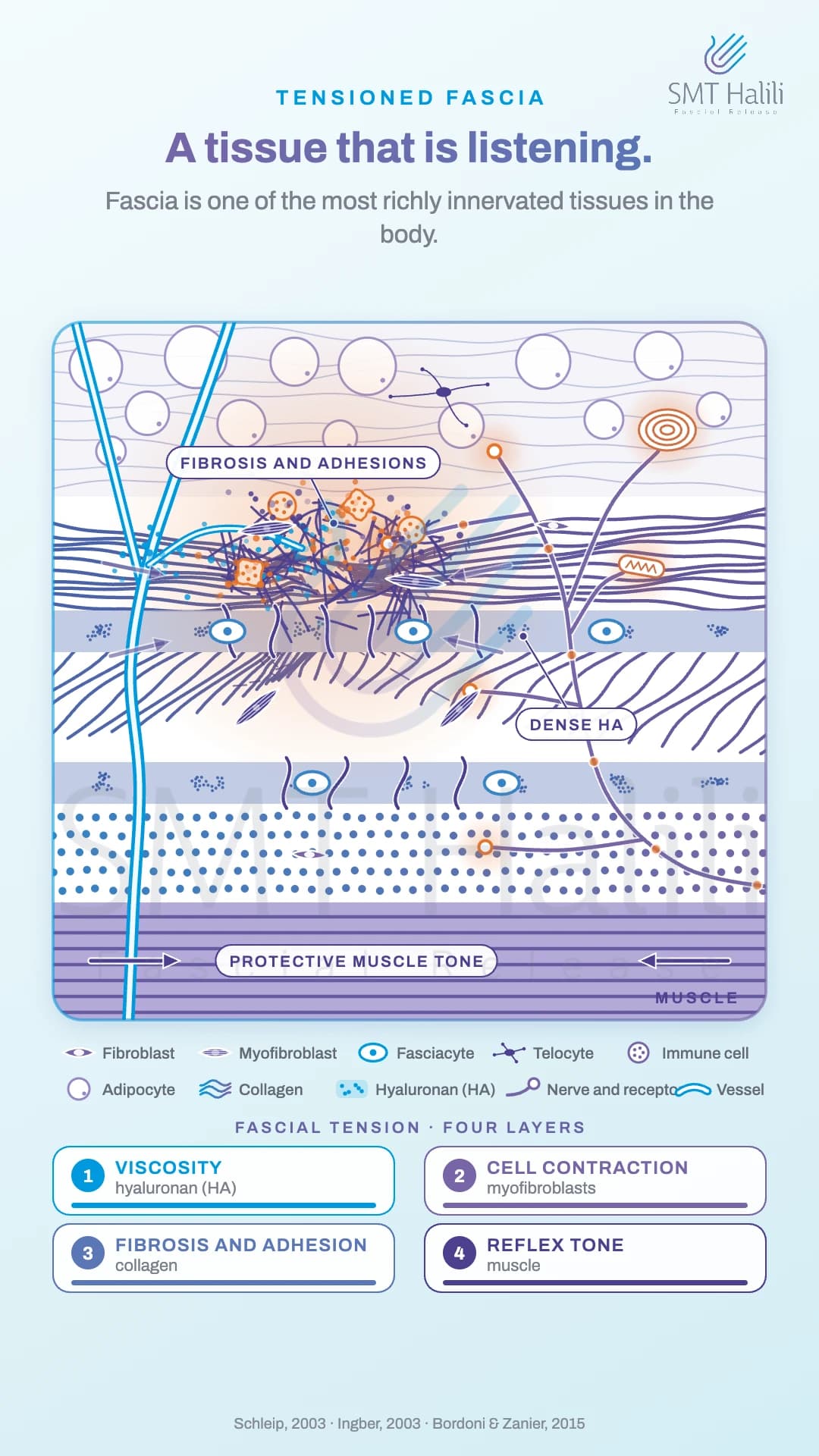
The Subtle Touch: From Tension to Glide
A schematic animation of the SMT Halili model for the subtle touch: how a light, sustained contact is received by the nervous system and the cells, and how the tissue glides again.
10 phases · 1 min 02 s
 08
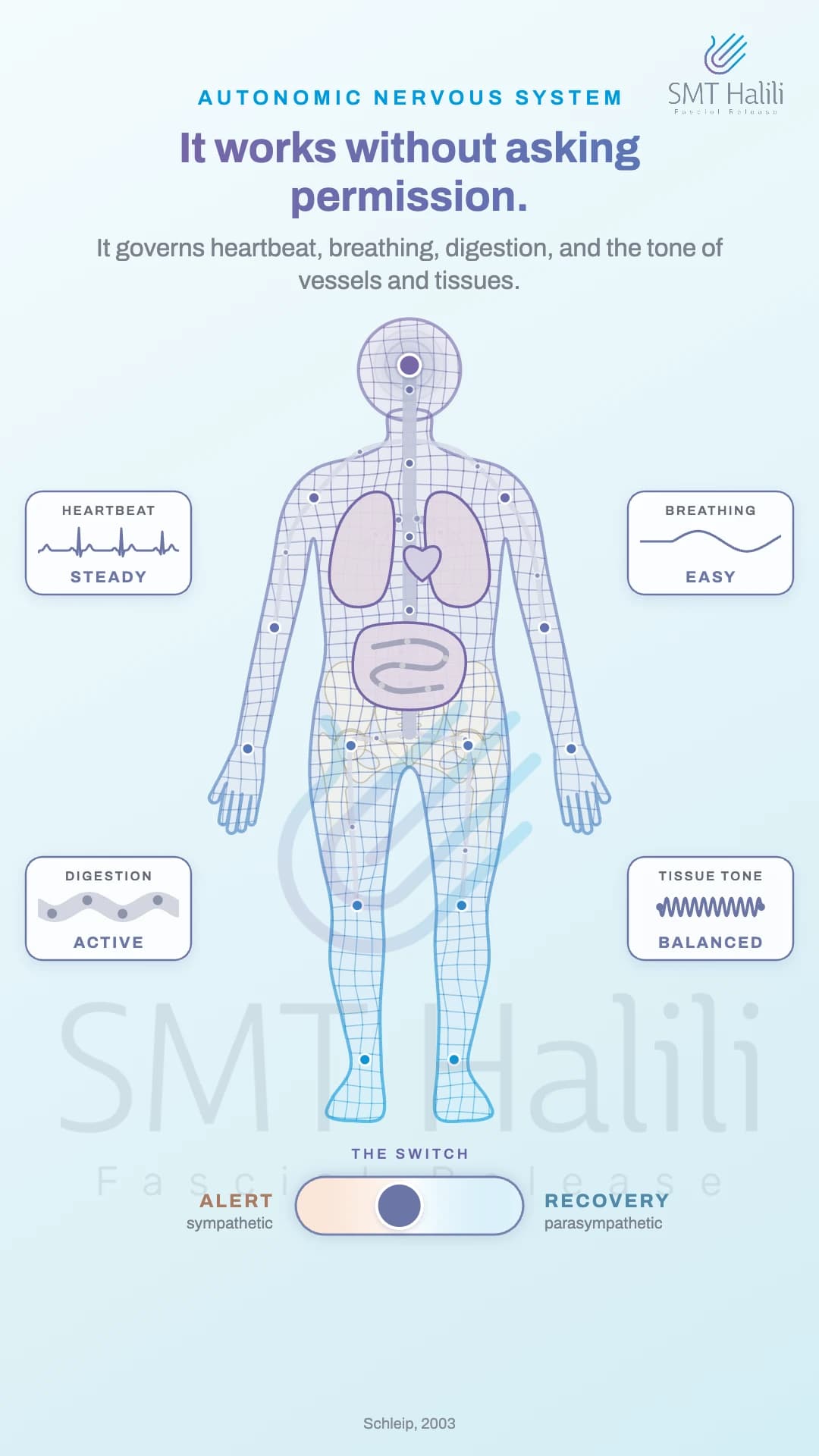
Autonomic Nervous System: The Switch Between Alert and Recovery
A phase-by-phase animation of the autonomic nervous system: alert mode, what happens when it won't switch off, and how the subtle touch shows the body the way back to recovery.
8 phases · 51 s